Review
Cardo vs Sena 2026: Which Motorcycle Intercom Is Better for You?
By The Gear Post · 2026-08-17
Cardo vs Sena in 2026: Packtalk Edge vs Sena 60S, DMC vs Mesh, group size, claimed range, manufacturer-rated battery and price — how to choose the ecosystem that fits your riding.
Quick comparison
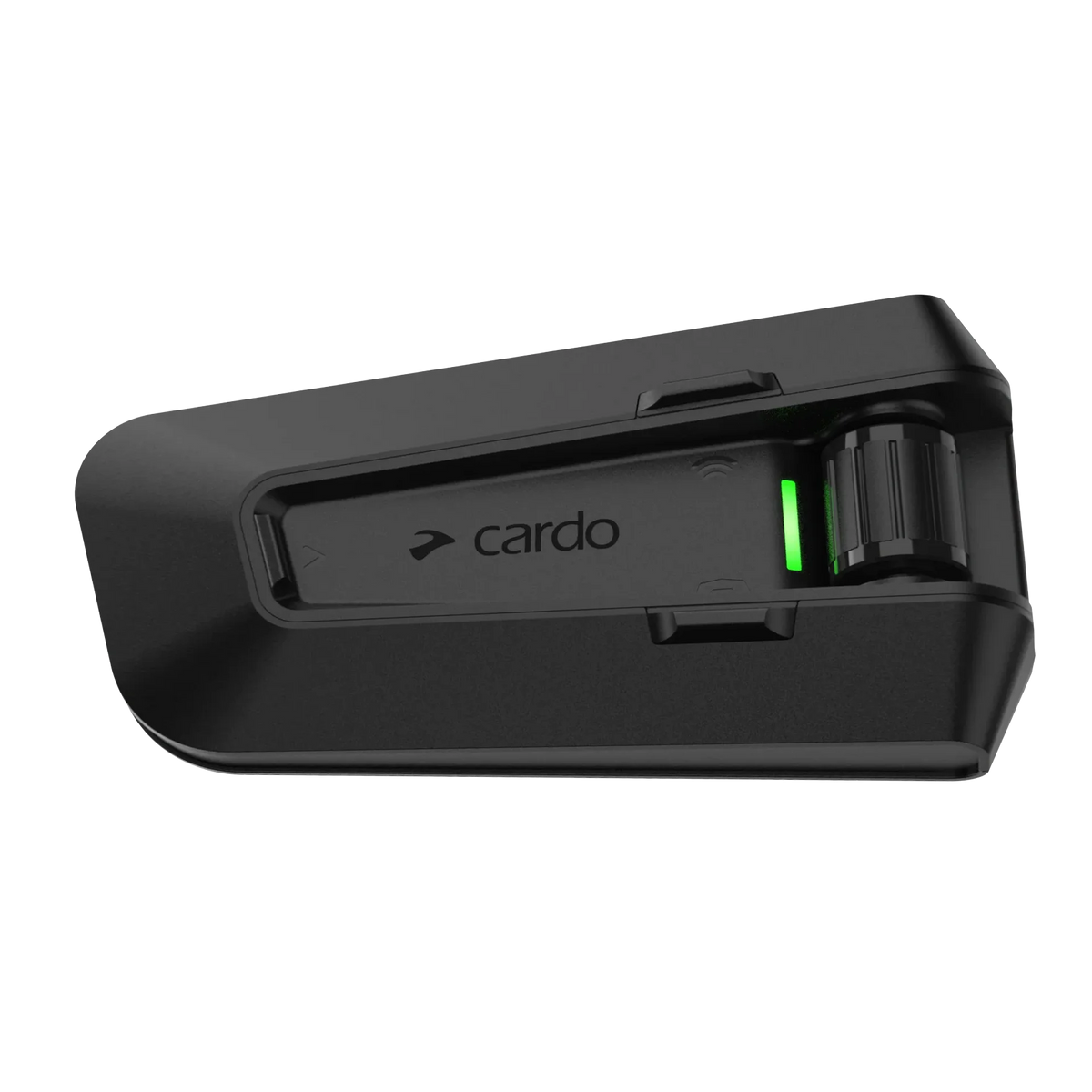
- Cardo Packtalk EdgeMSRP $439.95
- Best for
- Riders who want premium mesh group communication without paying for extra features
- Network, group size & audio
- 40 mm JBL · Up to 1.6 km / 1 mile · Up to 15 · Up to 13 hours claimed talk time
- Verdict
- Mesh intercom for up to 15 riders with JBL sound.
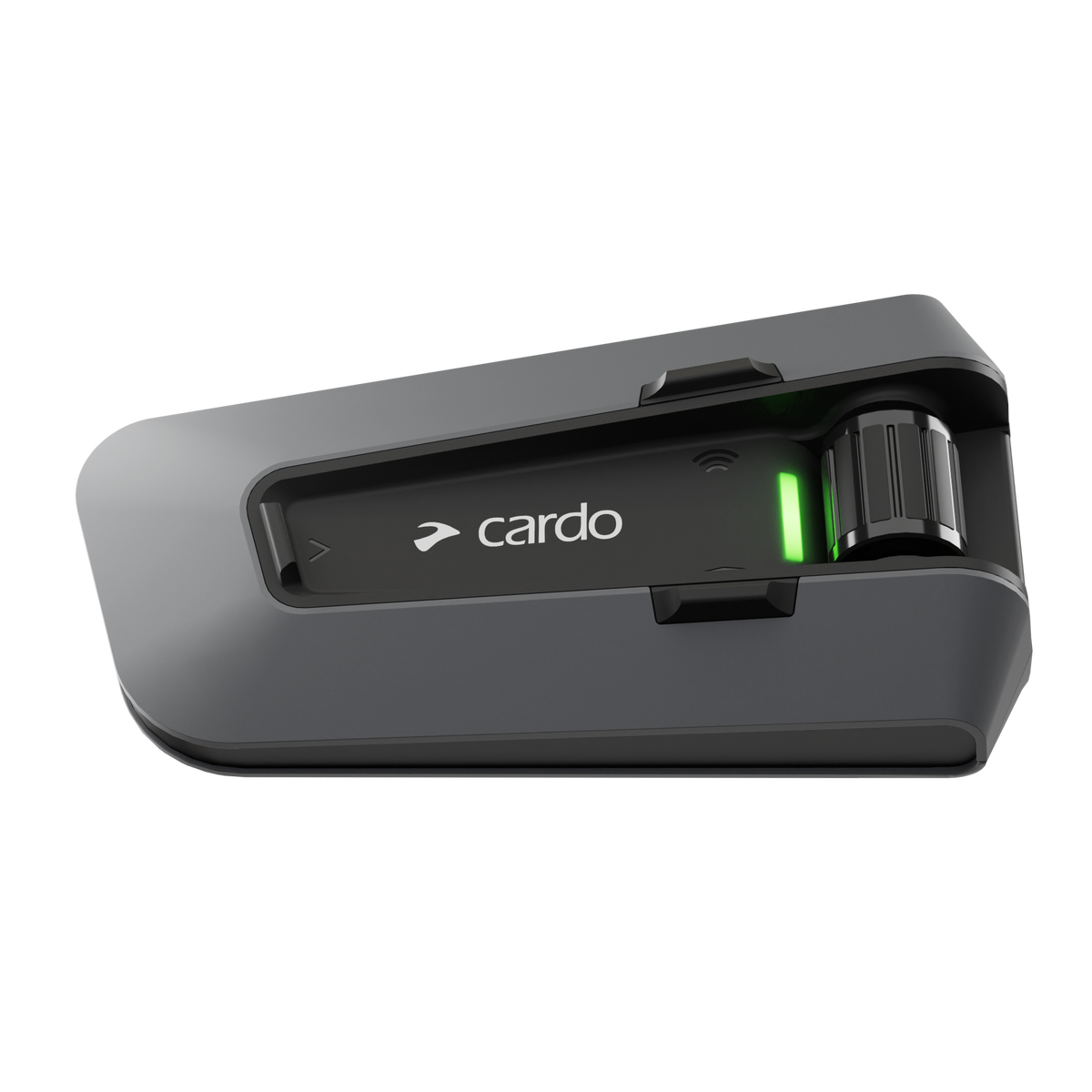
- Cardo Packtalk ProMSRP $499.95
- Best for
- Cardo riders who want crash detection and the larger speakers
- Network, group size & audio
- 45 mm JBL · Up to 15 · Crash Detection · 2nd-gen DMC Mesh
- Verdict
- Crash detection, JBL sound and Dynamic Mesh in one weatherproof unit.
- Cardo Packtalk NeoMSRP $359.95
- Best for
- Riders who want Cardo mesh without the Edge's magnetic mount
- Network, group size & audio
- 40 mm JBL · Up to 15 · Up to 13 hours talk time · Dynamic Mesh Communication
- Verdict
- Packtalk Edge performance with a traditional clamp mount and JBL speakers.
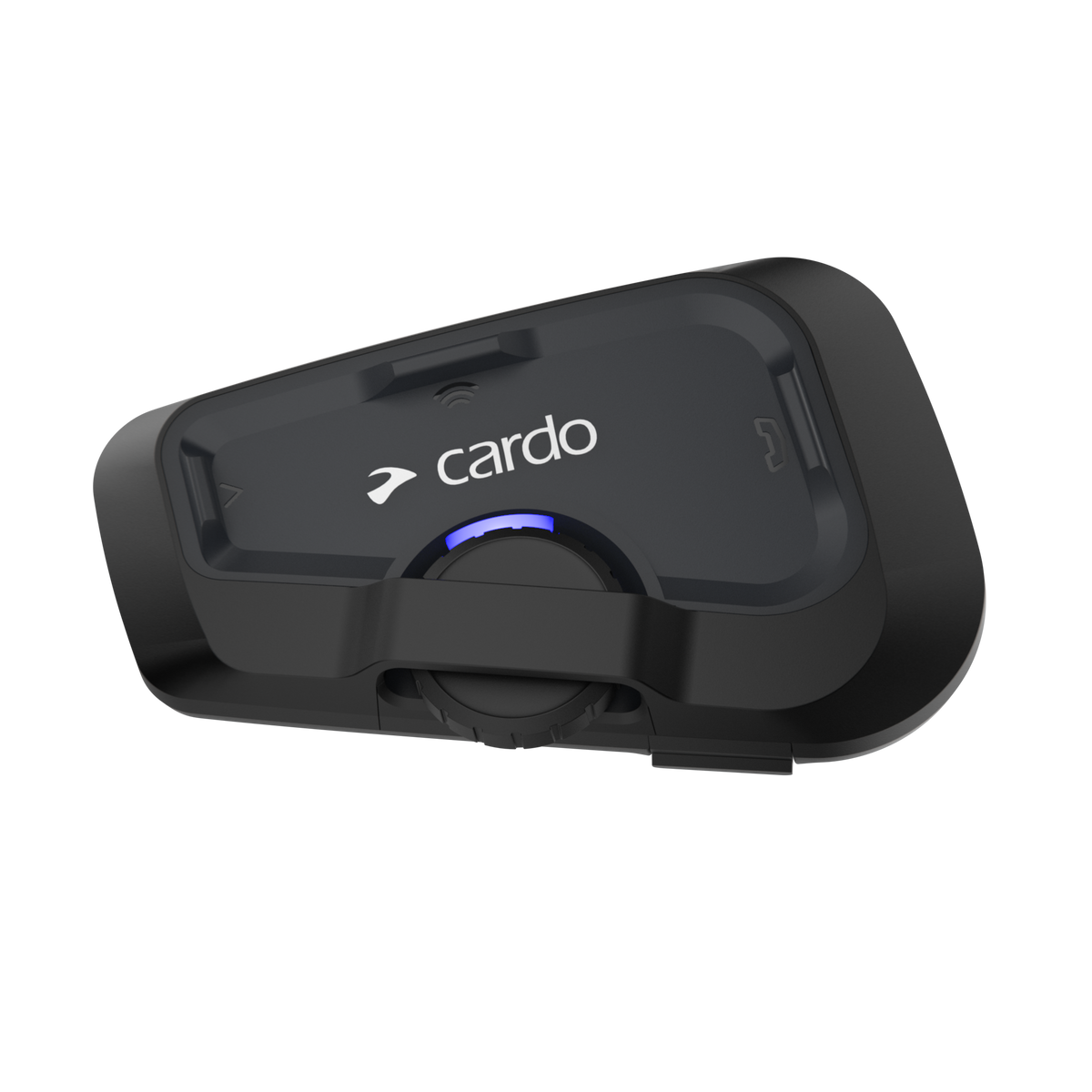
- Cardo Freecom 4XMSRP $314.95
- Best for
- Solo riders, rider-and-passenger pairs and small groups
- Network, group size & audio
- 40 mm JBL · Up to 4 · Bluetooth · IP67
- Verdict
- Bluetooth intercom for up to four riders with 40mm JBL speakers.
- Sena 60S Mesh IntercomMSRP $439
- Best for
- Riders whose regular group already runs Sena Mesh
- Network, group size & audio
- 40 mm Harman Kardon · Up to 2 km open terrain · Group Mesh up to 24 · Up to 24 h Bluetooth / 17 h Mesh claimed
- Verdict
- Sena's flagship mesh unit with Harman Kardon speakers and instant group pairing.
- Sena 50S Mesh IntercomMSRP $379
- Best for
- Sena riders who prefer the jog-dial control layout
- Network, group size & audio
- Harman Kardon · Up to 2 km open terrain · Group Mesh up to 24 · Mesh Intercom 2.0
- Verdict
- Mesh 2.0 with Harman Kardon speakers — the closest rival to Cardo's flagship.
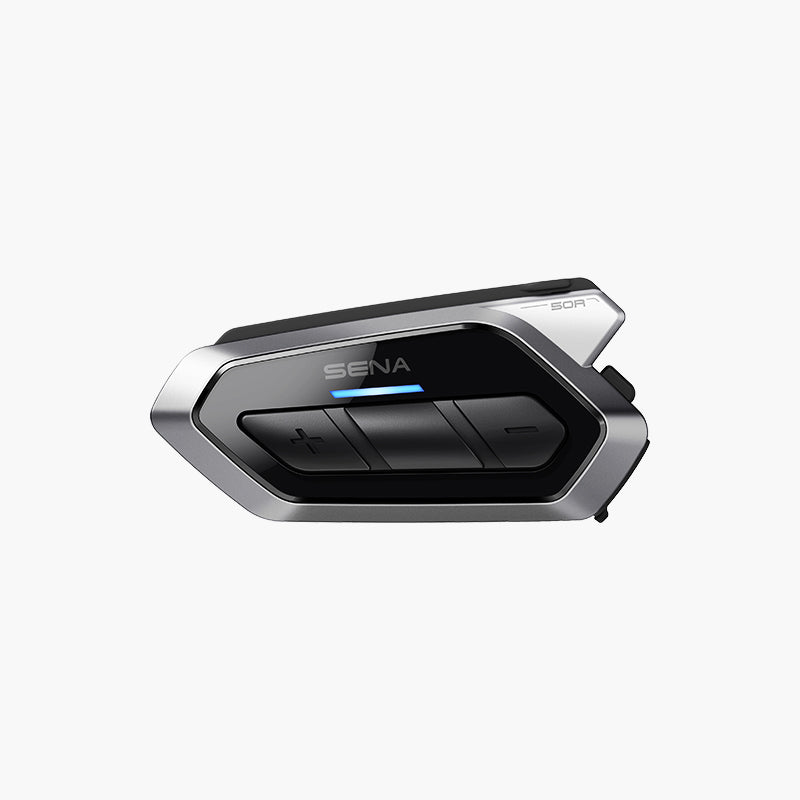
- Sena 50RMSRP $339
- Best for
- Sena riders who want the slimmest 50-series body
- Network, group size & audio
- Harman Kardon · Up to 2 km open terrain · Group Mesh up to 24 · Mesh Intercom 2.0
- Verdict
- Low-profile Sena mesh headset with Harman Kardon audio.
- Sena 5S Bluetooth HeadsetPrice varies
Amazon: Dual Pack
- Best for
- Riders on a budget who want calls, music and a small intercom group
- Network, group size & audio
- 700 m · 4 · USB-C · 9 hours
- Verdict
- Sena's entry headset with clean HD audio and a reliable four-way intercom.
| Product | Best for | Network, group size & audio | Our verdict | MSRP | Link |
|---|---|---|---|---|---|
| Cardo Packtalk Edge | Riders who want premium mesh group communication without paying for extra features | 40 mm JBL · Up to 1.6 km / 1 mile · Up to 15 · Up to 13 hours claimed talk time | Mesh intercom for up to 15 riders with JBL sound. | MSRP $439.95 | Check Price |
| Cardo Packtalk Pro | Cardo riders who want crash detection and the larger speakers | 45 mm JBL · Up to 15 · Crash Detection · 2nd-gen DMC Mesh | Crash detection, JBL sound and Dynamic Mesh in one weatherproof unit. | MSRP $499.95 | Check Price |
| Cardo Packtalk Neo | Riders who want Cardo mesh without the Edge's magnetic mount | 40 mm JBL · Up to 15 · Up to 13 hours talk time · Dynamic Mesh Communication | Packtalk Edge performance with a traditional clamp mount and JBL speakers. | MSRP $359.95 | Check Price |
| Cardo Freecom 4X | Solo riders, rider-and-passenger pairs and small groups | 40 mm JBL · Up to 4 · Bluetooth · IP67 | Bluetooth intercom for up to four riders with 40mm JBL speakers. | MSRP $314.95 | Check Price |
| Sena 60S Mesh Intercom | Riders whose regular group already runs Sena Mesh | 40 mm Harman Kardon · Up to 2 km open terrain · Group Mesh up to 24 · Up to 24 h Bluetooth / 17 h Mesh claimed | Sena's flagship mesh unit with Harman Kardon speakers and instant group pairing. | MSRP $439 | Check Price |
| Sena 50S Mesh Intercom | Sena riders who prefer the jog-dial control layout | Harman Kardon · Up to 2 km open terrain · Group Mesh up to 24 · Mesh Intercom 2.0 | Mesh 2.0 with Harman Kardon speakers — the closest rival to Cardo's flagship. | MSRP $379 | Check Price |
| Sena 50R | Sena riders who want the slimmest 50-series body | Harman Kardon · Up to 2 km open terrain · Group Mesh up to 24 · Mesh Intercom 2.0 | Low-profile Sena mesh headset with Harman Kardon audio. | MSRP $339 | Check Price |
| Sena 5S Bluetooth HeadsetAmazon: Dual Pack | Riders on a budget who want calls, music and a small intercom group | 700 m · 4 · USB-C · 9 hours | Sena's entry headset with clean HD audio and a reliable four-way intercom. | Price varies | Check Price |
Prices shown are manufacturer list prices (MSRP) for reference only — retail prices change often. “Check Latest Price” opens the merchant listing, where the current price is shown.
Some links on this page are affiliate links. If you make a purchase, we may earn a commission at no additional cost to you. Our recommendations are editorially independent.
Cardo and Sena have spent a decade trading features, and in 2026 the honest answer to "which is better" is that neither brand wins outright. Both make mesh intercoms that work well, both sell good Bluetooth units for riders who do not need mesh at all, and the specification gaps between them are narrower than the forum arguments suggest. If you are still choosing a category rather than a brand, start with our complete guide to the best motorcycle intercoms for 2026 and come back here once it is down to Cardo or Sena.
This comparison is researched editorial work, not a road test. Everything below is drawn from manufacturer specifications and our reconciled product catalog, and every range and battery figure is labelled as a manufacturer claim.
The quick answer
Buy into the ecosystem your regular riding group already uses. Cardo units mesh natively with Cardo units and Sena units mesh natively with Sena units; mixing brands is possible over universal Bluetooth, but it is not the same experience as one native group. If you ride mostly alone or with a passenger, neither flagship is necessary and a Bluetooth unit will save you real money.
If your group is Cardo, the Packtalk Edge is the unit most riders should look at. If your group is Sena, the 60S is the current flagship. If you have no group to match, choose on the features you actually use — mounting, controls, claimed battery, speaker size — because the communication performance is close enough that either will do the job.
Cardo vs Sena at a glance
| Specification | Cardo Packtalk Edge | Sena 60S |
|---|---|---|
| Mesh architecture | 2nd-generation DMC | Mesh Intercom 3.0 (2.0 compatible) |
| Stated group size | Up to 15 riders | Group Mesh up to 24; Open Mesh open participation |
| Claimed range | Up to 1.6 km / 1 mile unit-to-unit | Up to 2 km / 1.2 miles in open terrain |
| Speakers | 40 mm JBL | 2nd-gen 40 mm Harman Kardon |
| Manufacturer-rated talk time | Up to 13 hours | Up to 24 h Bluetooth / 17 h Mesh |
| Ingress rating | IP67 | IPX7 |
| Mounting | Magnetic Air Mount | Magnetic mount |
| Notable extras | Natural Voice Operation, OTA updates, cross-brand Bluetooth | Wave Intercom, Bluetooth 5.3, AI-based noise cancellation, OTA updates |
| Reference price | MSRP $439.95 at Cardo | MSRP $439.00 at Sena |
Mesh architecture
- Cardo Packtalk Edge
- 2nd-generation DMC
- Sena 60S
- Mesh Intercom 3.0 (2.0 compatible)
Stated group size
- Cardo Packtalk Edge
- Up to 15 riders
- Sena 60S
- Group Mesh up to 24; Open Mesh open participation
Claimed range
- Cardo Packtalk Edge
- Up to 1.6 km / 1 mile unit-to-unit
- Sena 60S
- Up to 2 km / 1.2 miles in open terrain
Speakers
- Cardo Packtalk Edge
- 40 mm JBL
- Sena 60S
- 2nd-gen 40 mm Harman Kardon
Manufacturer-rated talk time
- Cardo Packtalk Edge
- Up to 13 hours
- Sena 60S
- Up to 24 h Bluetooth / 17 h Mesh
Ingress rating
- Cardo Packtalk Edge
- IP67
- Sena 60S
- IPX7
Mounting
- Cardo Packtalk Edge
- Magnetic Air Mount
- Sena 60S
- Magnetic mount
Notable extras
- Cardo Packtalk Edge
- Natural Voice Operation, OTA updates, cross-brand Bluetooth
- Sena 60S
- Wave Intercom, Bluetooth 5.3, AI-based noise cancellation, OTA updates
Reference price
- Cardo Packtalk Edge
- MSRP $439.95 at Cardo
- Sena 60S
- MSRP $439.00 at Sena
Range and battery numbers above are manufacturer claims measured in ideal conditions. Terrain, traffic, helmet fit and volume all reduce them in practice, and both brands are affected the same way.
Packtalk Edge vs Sena 60S
These are the two units most Cardo-vs-Sena decisions come down to, and they are priced within a dollar of each other. The Edge leads on simplicity: second-generation DMC forms and repairs a group of up to 15 riders on its own, Natural Voice Operation means you rarely touch the unit, and the Air Mount snaps on magnetically. The 60S leads on stated capacity and endurance: Group Mesh takes up to 24 participants, Open Mesh is effectively unlimited, and Sena rates it at up to 24 hours of Bluetooth talk time or 17 hours on Mesh.
If your rides are with a fixed group of a dozen or fewer, the Edge's ceiling is not a limitation and the difference is mostly ergonomics. If you ride with organised groups, rallies or clubs where the roster changes, the 60S's larger stated capacity and Open Mesh are a genuine functional advantage rather than a spec-sheet number.
Communication: Cardo DMC vs Sena Mesh
Cardo's Dynamic Mesh Communication builds a self-organising network. Riders join once, and the group repairs itself as bikes drop out of range and rejoin — no re-pairing, no chain of hops to rebuild. Current Packtalk models run second-generation DMC and support up to 15 riders in a group.
Sena splits mesh into two modes. Group Mesh is a private, closed group — up to 24 participants on the 60S. Open Mesh is a public channel any nearby Sena rider can hop onto, which supports far larger, looser participation and is useful at events or on group rides where riders come and go.
Neither approach is technically superior in a way that matters on the road. DMC is simpler because there is only one kind of group; Sena's split gives you a public option Cardo does not offer. What matters far more than the architecture is whether the people you ride with are on the same one.
Group riding
For small groups — two to six riders — either ecosystem is comfortably capable, and even a Bluetooth unit like the Cardo Freecom 4X handles up to four riders without mesh. For medium groups of six to fifteen, both flagship platforms work; Cardo's DMC hits its stated ceiling at 15. Above that, only Sena publishes a higher figure, with Group Mesh at 24 and Open Mesh beyond it.
The practical rule stands regardless of size: one ecosystem per group. A mixed group falls back to a universal Bluetooth connection for the cross-brand rider, which is the weakest link in the chain.
Cross-brand communication
Current Cardo and Sena units can talk to each other using supported universal Bluetooth intercom functionality. That is genuinely useful when one rider joins with the other brand.
What it does not do is merge two brands into a single native mesh group with all the same-brand capabilities. The cross-brand rider is connected over Bluetooth, not folded into DMC or Mesh, so the self-healing and group-capacity behaviour you paid for does not extend to them.
If your regular riding group already uses one ecosystem, staying within that ecosystem is usually the simplest option.
Audio
Cardo partners with JBL; Sena partners with Harman Kardon. The Packtalk Edge and Neo use 40 mm JBL speakers, the Packtalk Pro steps up to 45 mm, and the 60S uses second-generation 40 mm Harman Kardon drivers with AI-based noise cancellation.
We are not going to tell you which sounds better, because that claim needs controlled independent testing we have not done. What we can say objectively is that speaker diameter, driver generation and processing features differ as listed above — and that perceived sound quality in a helmet depends heavily on helmet acoustics, how precisely the speakers sit over your ears, riding speed, wind noise and your own hearing. A well-positioned 40 mm speaker in a quiet helmet beats a poorly positioned 45 mm speaker every time.
Battery
Manufacturer-rated talk time, not measured runtime: Cardo rates the Packtalk Edge at up to 13 hours, and Sena rates the 60S at up to 24 hours on Bluetooth or 17 hours on Mesh. On paper that is a substantial advantage to Sena, and it is the clearest specification gap between the two flagships.
Treat it as a ceiling rather than a promise. Mesh mode, high volume, cold weather and simultaneous music streaming all pull real-world runtime below the rated figure on both brands. For a full day of touring with a lunch stop, either unit will get you through; for multi-day rides without a charge, the 60S's rating gives you more headroom.
Range
Cardo claims up to 1.6 km / 1 mile unit-to-unit for the Packtalk Edge. Sena claims up to 2 km / 1.2 miles in open terrain for the 60S and the 50-series.
Both figures assume line of sight with nothing in between. In mesh operation, effective group range extends further because riders relay for each other, which matters more than the headline number. Hills, buildings and traffic cut both brands down sharply.
Weather protection
The Packtalk Edge and Pro carry IP67. The Sena 60S carries IPX7.
The difference is narrower than it looks. The "7" in both cases is the same water rating — protection against temporary immersion. The "X" in IPX7 means dust protection was simply not rated, not that it failed a test. IP67 additionally certifies full dust ingress protection. Both are appropriate for riding in rain; only Cardo publishes a dust figure.
Controls and mounting
Cardo's Air Mount on the Edge and Pro is magnetic and easy to attach with gloves on; the Packtalk Neo uses a conventional clamp for riders who prefer it. Natural Voice Operation means most functions can be triggered by speaking without a wake button.
Sena's 60S also mounts magnetically. Across the Sena range the control philosophy is the deciding factor: the 50S uses a jog dial, the 50R and 5S use buttons. If you ride in thick winter gloves, try both formats before deciding — this is a more meaningful daily difference than most of the specifications above.
Packtalk Pro vs Sena 60S
The Packtalk Pro is Cardo's premium unit at MSRP $499.95. It runs the same second-generation DMC as the Edge, so it does not communicate better or reach further. What the extra money buys is 45 mm JBL speakers instead of 40 mm, Crash Detection (confirm availability in your region with Cardo), and Auto On/Off, on the same magnetic Air Mount and IP67 rating.
Against the 60S, the Pro is a different set of priorities rather than a straight upgrade: safety features and larger speakers on the Cardo side, stated group capacity and rated battery life on the Sena side. Choose the Pro if Crash Detection is the feature you want; do not choose it expecting a better group experience than the Edge.
Where the Sena 50S and 50R fit
The 50-series is not the current flagship and we will not pretend otherwise. Both units run Mesh Intercom 2.0 rather than the 60S's 3.0, with Harman Kardon audio, a claimed 2 km open-terrain range and Group Mesh for up to 24 participants.
The real choice between them is the control format. The 50S uses Sena's jog dial, which many long-time Sena riders specifically prefer. The 50R uses a slimmer three-button body for riders who want the lowest profile on the helmet shell. Reference prices are MSRP $379.00 and MSRP $339.00 at Sena respectively — below the 60S, but we are not calling them bargains without verified current retail pricing. Check the live listing before deciding whether the saving over a 60S is real.
What about two riders?
If your intercom use is you and a passenger, or you and one regular riding partner, mesh is capacity you will never use. A Bluetooth unit connects up to four riders and costs substantially less.
On the Cardo side that is the Freecom 4X at MSRP $314.95, with the same 40 mm JBL speakers, Natural Voice Operation and IP67 rating as the mesh units. On the Sena side the 5S is the budget entry with Bluetooth intercom for four riders and a claimed 9 hours of talk time. Buying a flagship mesh unit for two-up riding is the most common overspend in this category.
Which ecosystem should you choose?
Choose Cardo if your regular group already runs Cardo or DMC; if the Packtalk Edge's combination of magnetic mounting, voice control and IP67 matches how you ride; or if you specifically want Packtalk Pro features like Crash Detection and 45 mm speakers.
Choose Sena if your regular group already runs Sena Mesh; if you need the larger stated Group Mesh capacity or Open Mesh participation of the 60S; or if the higher manufacturer-rated talk time better fits long days and multi-day trips.
Choose neither flagship if you mostly ride alone, only talk to a passenger, ride with one or two partners, or simply want navigation prompts, calls and music in the helmet. The Freecom 4X or the Sena 5S covers all of that.
| Situation | Cardo | Sena | Why |
|---|---|---|---|
| Existing Cardo group | Strong choice | Possible | Native ecosystem |
| Existing Sena group | Possible | Strong choice | Native ecosystem |
| Large organised group | Strong | Strong — 60S advantage in stated capacity | Different mesh architectures |
| Touring | Strong | Strong | Compare rated battery and features |
| Rider plus passenger | Possibly more than needed | Possibly more than needed | Consider cheaper Bluetooth units |
| Premium features | Packtalk Pro | Sena 60S | Different feature priorities |
| Simple small-group use | Freecom 4X | Lower-cost Sena option | Flagship mesh may be unnecessary |
Existing Cardo group
- Cardo
- Strong choice
- Sena
- Possible
- Why
- Native ecosystem
Existing Sena group
- Cardo
- Possible
- Sena
- Strong choice
- Why
- Native ecosystem
Large organised group
- Cardo
- Strong
- Sena
- Strong — 60S advantage in stated capacity
- Why
- Different mesh architectures
Touring
- Cardo
- Strong
- Sena
- Strong
- Why
- Compare rated battery and features
Rider plus passenger
- Cardo
- Possibly more than needed
- Sena
- Possibly more than needed
- Why
- Consider cheaper Bluetooth units
Premium features
- Cardo
- Packtalk Pro
- Sena
- Sena 60S
- Why
- Different feature priorities
Simple small-group use
- Cardo
- Freecom 4X
- Sena
- Lower-cost Sena option
- Why
- Flagship mesh may be unnecessary
How we compared Cardo and Sena
This is researched editorial content. We did not ride with these units back to back, and we do not claim to have. The comparison is built from manufacturer specifications published by Cardo and Sena, cross-checked against our own reconciled product catalog, and weighted by rider use case.
The factors we compared are communication architecture, stated group capacity, claimed range, manufacturer-rated battery life, audio hardware and partnerships, ingress rating, control format, mounting system, cross-brand functionality, warranty and published features. Where a number is a manufacturer claim, we say so. Where a judgement would require controlled testing — sound quality above all — we decline to make it.
FAQ
Is Cardo better than Sena? No, and neither is the reverse. They are close on the specifications that matter and differ on architecture and features. The ecosystem your riding group uses should be your first filter.
Can Cardo connect to Sena? Yes, current units can connect using universal Bluetooth intercom functionality. That connection does not create one unified native DMC or Mesh group with full same-brand mesh behaviour.
Is Cardo DMC better than Sena Mesh? They work differently rather than one being better. DMC is a single self-organising group of up to 15 riders on current Packtalk models. Sena splits into private Group Mesh — 24 participants on the 60S — and public Open Mesh.
Which is better for large groups? Sena publishes the higher figure: Group Mesh up to 24 and Open Mesh for open participation. Cardo's DMC is stated at up to 15. For groups under 15, both are sufficient.
Which has better battery life? On manufacturer ratings, the Sena 60S — up to 24 hours Bluetooth or 17 hours Mesh, against up to 13 hours for the Packtalk Edge. These are claims, not measured results.
Packtalk Edge or Sena 60S? Match your group. With no group to match, the Edge suits riders who want the simplest mesh and magnetic mounting; the 60S suits riders who want the larger stated capacity and longer rated battery.
Is the Packtalk Pro worth more than the Edge? Only for its specific features. Both run the same second-generation DMC, so communication is unchanged. The premium buys 45 mm speakers, Crash Detection and Auto On/Off.
Do I need Mesh for two riders? No. A Bluetooth unit handles up to four riders for considerably less money.
Can Cardo and Sena play music while using the intercom? Both brands support music alongside intercom on their current units, with behaviour varying by model, mode and firmware — check the manual for your exact unit.
Final verdict
Neither brand wins. Cardo's second-generation DMC is the simpler mesh, the Air Mount and Natural Voice Operation are excellent, and IP67 is the more complete ingress rating. Sena's 60S publishes higher group capacity, longer rated talk time and a longer claimed range, and Open Mesh has no Cardo equivalent. At effectively the same reference price, the deciding factor for most riders is which units their riding partners already own.
For the full field beyond these two brands, including budget and helmet-integrated options, see our complete guide to the best motorcycle intercoms for 2026.