Review
Best Motorcycle Action Cameras 2026
By The Gear Post · 2026-08-17
GoPro, DJI and Insta360 compared for riders: mounting, stabilisation, wind noise, manufacturer battery claims and 360 versus conventional capture. Researched picks, manufacturer list pricing.
Quick comparison
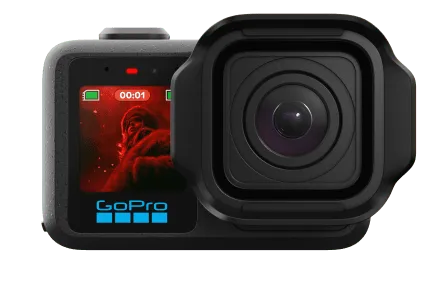
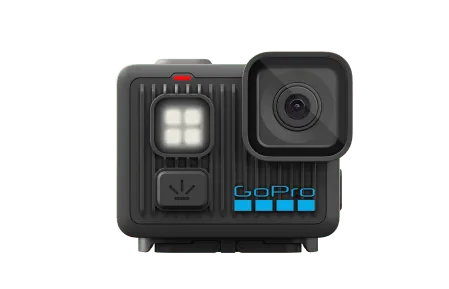
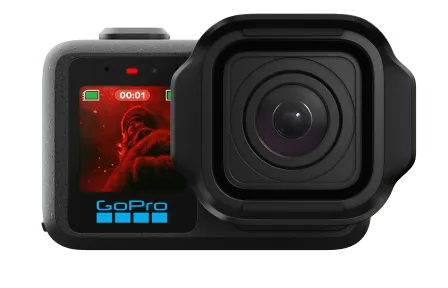
- GoPro Hero 13 BlackMSRP $399.99
Amazon: camera only
- Best for
- The widest mount and accessory ecosystem
- Sensor, battery & storage
- HB-Series swappable · 1/1.9in · 1900 mAh Enduro · microSD only
- Verdict
- The widest mount and accessory ecosystem for riders, with 5.3K60 capture, HyperSmooth 6.0 and swappable HB-Series lens mods.
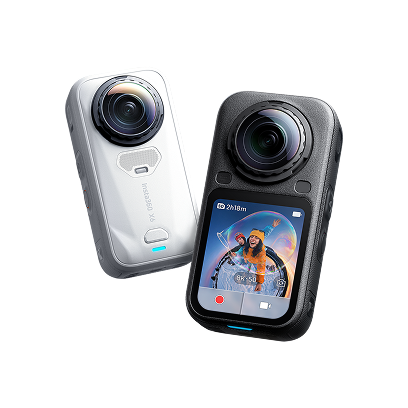
- Insta360 X6MSRP $699.99
Standard Bundle (camera + Xtreme Battery) — no confirmed Amazon listing yet
- Best for
- Riders who want to capture everything and decide the angle later
- Sensor, battery & storage
- 2.32in front and rear touch · Dual 1/1.1in · 2600 mAh Xtreme Battery · 64 GB internal + microSD
- Verdict
- Insta360's 2026 flagship 360 camera: dual 1/1.1-inch sensors, 8K30 360 capture, 20 m waterproofing without a case and 64 GB of built-in storage.
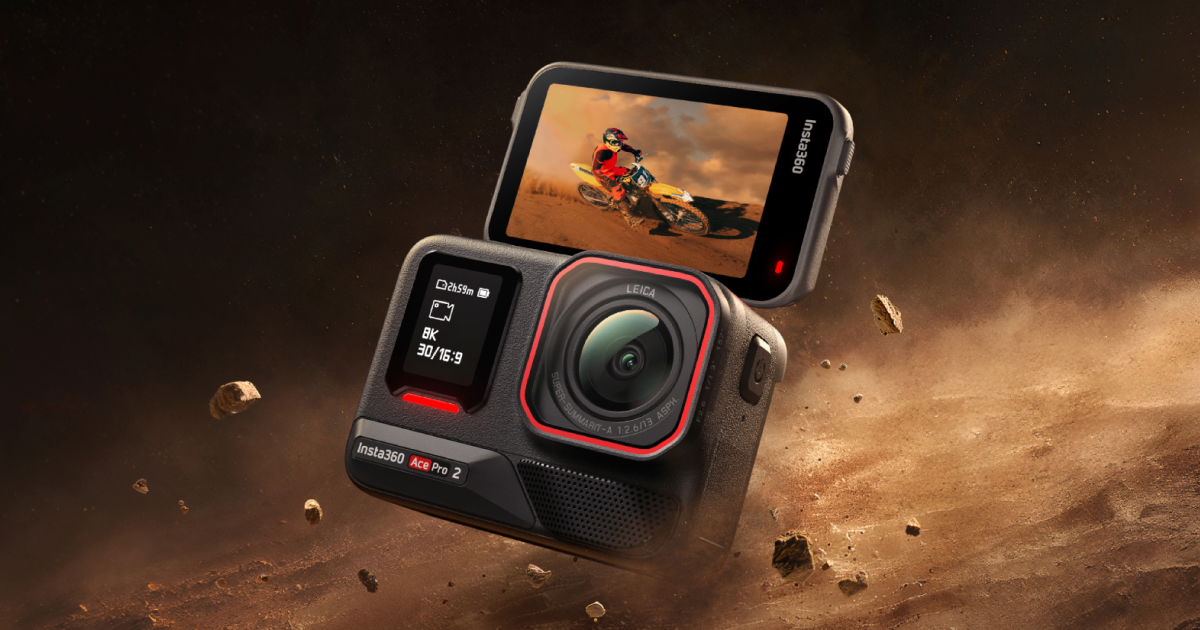
- Insta360 Ace Pro 2MSRP $389.99
Amazon: Dual Battery Bundle
- Best for
- Low-light and night riding, on hardware terms
- Sensor, battery & storage
- Wind Guard · 2.5in flip touch · 1/1.3in · 1800 mAh, 112 min manufacturer claim
- Verdict
- Conventional action camera with a 1/1.3-inch sensor, Leica SUMMARIT lens, 8K30 video, a flip touchscreen and a manufacturer-rated 112-minute runtime.
- DJI Osmo Action 5 ProMSRP $319
Amazon: Standard Combo
- Best for
- The value conventional camera with official US support
- Sensor, battery & storage
- Dual OLED front and rear · 1/1.3in · ~4 h manufacturer lab claim · 47 GB internal
- Verdict
- DJI's rider-friendly alternative to GoPro: a 1/1.3-inch sensor, 4K120 video and a manufacturer-rated 4-hour battery.
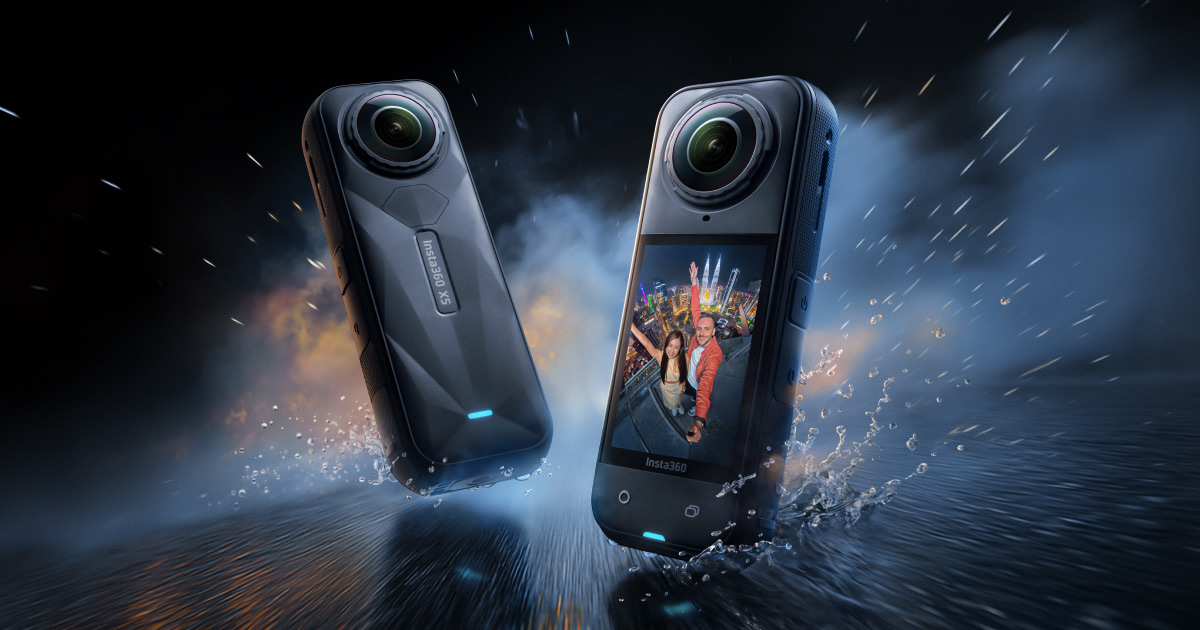
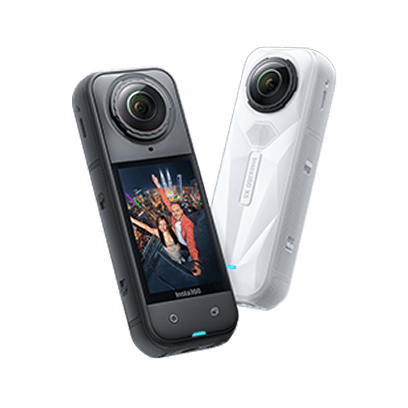
- Insta360 X5MSRP $549.99
Amazon: camera only
- Best for
- The value route into 360 riding footage
- Sensor, battery & storage
- 2.09in touch · Dual 1/1.28in · 2010 mAh · microSD only
- Verdict
- The previous-generation 360 flagship: 8K30 capture, dual 1/1.28-inch sensors, replaceable lenses and 15 m waterproofing, at $150 less than the X6.
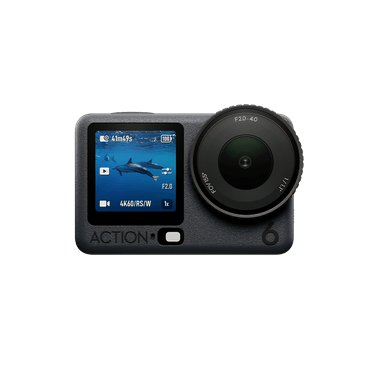
- DJI Osmo Action 6Price varies
Amazon: Essential Combo — no official US retail channel
- Best for
- Riders who want the newest hardware and can source it
- Sensor, battery & storage
- OsmoAudio wireless mic · Front and rear touch · 1/1.1in square · ~4 h manufacturer claim
- Verdict
- DJI's 2026 flagship: a 1/1.1-inch square sensor with a variable f/2.0-f/4.0 aperture, 50 GB internal storage and 20 m waterproofing — but no official US retail channel.
- Insta360 X4 360 CameraMSRP $499.99
Amazon: Standard Bundle
- Best for
- The older 360 camera, often discounted
- Sensor, battery & storage
- Dual 1/2in · 2290 mAh · microSD only · F1.9
- Verdict
- 8K 360 capture that lets you reframe the shot after the ride, one generation behind the X5.
- GoPro Hero 12 Black$369.99 at GoPro
Amazon: camera only
- Best for
- Last-generation GoPro at a lower price
- Sensor, battery & storage
- 1/1.9in · 1720 mAh Enduro · microSD only · f/2.5
- Verdict
- The previous-generation HERO, still 5.3K60 with HyperSmooth 6.0, usually sold well below the HERO13.
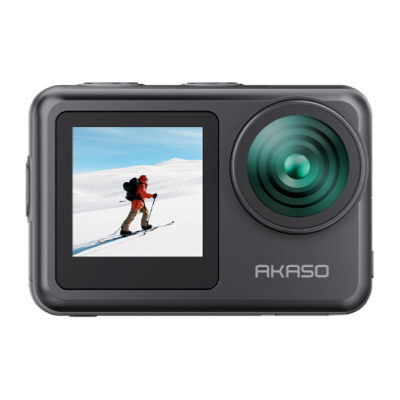
- AKASO Brave 7 LE Action CameraPrice varies
Amazon: camera + 2 batteries
- Best for
- A cheap witness camera rather than a filming camera
- Sensor, battery & storage
- Dual · 4K30 · IPX7 body · EIS
- Verdict
- A budget 4K30 helmet cam with a front screen, electronic stabilisation and two batteries in the box.
| Product | Best for | Sensor, battery & storage | Our verdict | Reference price | Link |
|---|---|---|---|---|---|
| GoPro Hero 13 BlackAmazon: camera only | The widest mount and accessory ecosystem | HB-Series swappable · 1/1.9in · 1900 mAh Enduro · microSD only | The widest mount and accessory ecosystem for riders, with 5.3K60 capture, HyperSmooth 6.0 and swappable HB-Series lens mods. | MSRP $399.99 | Check Price |
| Insta360 X6Standard Bundle (camera + Xtreme Battery) — no confirmed Amazon listing yet | Riders who want to capture everything and decide the angle later | 2.32in front and rear touch · Dual 1/1.1in · 2600 mAh Xtreme Battery · 64 GB internal + microSD | Insta360's 2026 flagship 360 camera: dual 1/1.1-inch sensors, 8K30 360 capture, 20 m waterproofing without a case and 64 GB of built-in storage. | MSRP $699.99 | Check Price |
| Insta360 Ace Pro 2Amazon: Dual Battery Bundle | Low-light and night riding, on hardware terms | Wind Guard · 2.5in flip touch · 1/1.3in · 1800 mAh, 112 min manufacturer claim | Conventional action camera with a 1/1.3-inch sensor, Leica SUMMARIT lens, 8K30 video, a flip touchscreen and a manufacturer-rated 112-minute runtime. | MSRP $389.99 | Check Price |
| DJI Osmo Action 5 ProAmazon: Standard Combo | The value conventional camera with official US support | Dual OLED front and rear · 1/1.3in · ~4 h manufacturer lab claim · 47 GB internal | DJI's rider-friendly alternative to GoPro: a 1/1.3-inch sensor, 4K120 video and a manufacturer-rated 4-hour battery. | MSRP $319 | Check Price |
| Insta360 X5Amazon: camera only | The value route into 360 riding footage | 2.09in touch · Dual 1/1.28in · 2010 mAh · microSD only | The previous-generation 360 flagship: 8K30 capture, dual 1/1.28-inch sensors, replaceable lenses and 15 m waterproofing, at $150 less than the X6. | MSRP $549.99 | Check Price |
| DJI Osmo Action 6Amazon: Essential Combo — no official US retail channel | Riders who want the newest hardware and can source it | OsmoAudio wireless mic · Front and rear touch · 1/1.1in square · ~4 h manufacturer claim | DJI's 2026 flagship: a 1/1.1-inch square sensor with a variable f/2.0-f/4.0 aperture, 50 GB internal storage and 20 m waterproofing — but no official US retail channel. | Price varies | Check Price |
| Insta360 X4 360 CameraAmazon: Standard Bundle | The older 360 camera, often discounted | Dual 1/2in · 2290 mAh · microSD only · F1.9 | 8K 360 capture that lets you reframe the shot after the ride, one generation behind the X5. | MSRP $499.99 | Check Price |
| GoPro Hero 12 BlackAmazon: camera only | Last-generation GoPro at a lower price | 1/1.9in · 1720 mAh Enduro · microSD only · f/2.5 | The previous-generation HERO, still 5.3K60 with HyperSmooth 6.0, usually sold well below the HERO13. | $369.99 at GoPro | Check Price |
| AKASO Brave 7 LE Action CameraAmazon: camera + 2 batteries | A cheap witness camera rather than a filming camera | Dual · 4K30 · IPX7 body · EIS | A budget 4K30 helmet cam with a front screen, electronic stabilisation and two batteries in the box. | Price varies | Check Price |
Prices shown are manufacturer list prices (MSRP) for reference only — retail prices change often. “Check Latest Price” opens the merchant listing, where the current price is shown.
Some links on this page are affiliate links. If you make a purchase, we may earn a commission at no additional cost to you. Our recommendations are editorially independent.
A motorcycle camera has two jobs. Most of the time it makes footage nobody but you will watch. Once, maybe, it is the only record of what a car did at a junction. Both jobs reward the same things: a mount that stays put, stabilisation that survives a chain-driven engine, audio that is not pure wind roar, and a battery that lasts longer than the interesting part of the ride.
This guide is researched editorial. Specifications and battery figures below come from manufacturer specification pages and are labelled as manufacturer claims. We have not run a controlled road test of these nine cameras, and nothing here is presented as one. Where we prefer a camera, the reason is a documented capability or a verifiable price, not a stopwatch we did not use.
If you also want rider-to-rider audio, our best motorcycle intercoms guide and the Cardo vs Sena comparison cover that side. For bar hardware, see best motorcycle phone mounts.
Quick picks
**Best overall: GoPro HERO13 Black.** 5.3K60, HyperSmooth 6.0, 10 m waterproof, 1,900 mAh Enduro battery, and the largest mount ecosystem of any action camera — which on a motorcycle is the specification that actually decides whether you can fit it where you want it.
**Best 360: Insta360 X6.** Dual 1/1.1-inch sensors, 8K30 full-sphere capture, 64 GB internal storage and 20 m waterproofing without a case.
**Best for low light and versatility, on hardware terms: Insta360 Ace Pro 2.** The biggest sensor of the conventional cameras here at 1/1.3 inches, a Leica SUMMARIT lens, a flip screen and a stated 112-minute manufacturer runtime.
**Best DJI you can actually buy in the US: Osmo Action 5 Pro.** $319 at DJI, 47 GB internal storage, dual OLED screens, IP68 to 20 metres.
**Best-value 360: Insta360 X5.** The same 8K30 reframing workflow as the X6 for $150 less at manufacturer list.
Why the DJI Osmo Action 6 is not our top pick
On paper the Action 6 wins. A 1/1.1-inch square sensor, the first variable aperture on a DJI action camera at f/2.0 to f/4.0, 50 GB of internal storage, IP68 to 20 metres and OsmoAudio wireless microphone pairing is the best hardware in this group.
DJI does not sell it through official US retail channels. That means US listings are imports at prices that move week to week, with no manufacturer list price we can quote and no domestic warranty path. For a buying guide aimed at North American riders, that is disqualifying for a top slot, not for the shortlist. It stays here as an alternative, and we show no reference price for it rather than quoting an import figure as though it were a manufacturer price.
Best overall: GoPro HERO13 Black
HERO13 shoots 5.3K60 on a 1/1.9-inch sensor behind an f/2.5 lens, stabilised by HyperSmooth 6.0, waterproof to 10 metres without a housing, powered by a 1,900 mAh Enduro battery.
None of those are class-leading numbers in 2026. The ecosystem is. Every chin mount, tank mount, bar clamp, tether and adhesive base built for a GoPro over the last decade fits the standard two-prong folding mount, and there is a 1/4-inch insert for everything else. HB-Series swappable lenses — macro, anamorphic, ND, ultra-wide — let one body cover several jobs. If you are choosing a camera because you already know exactly where you want it on your helmet or bike, the mount catalogue is worth more than a resolution headline.
The weaknesses are honest ones: no internal storage, so a corrupted card is a lost ride, and cold-weather battery life is the usual action-camera compromise. Carry a spare or run a USB-C lead.
Best 360: Insta360 X6
The X6 records everything around you at 8K30 on dual 1/1.1-inch sensors, then lets you pick the framing in the app afterwards. For riding that is a genuinely different product, not a better version of the same one. You mount once and stop thinking about aim. You get the invisible-selfie-stick third-person shot that makes an ordinary commute look like drone footage. And in the incident case, you have the car that came from the side you were not pointing at.
Practical details that matter on a bike: 20 metres of waterproofing without a case, a 2,600 mAh swappable Xtreme Battery, 64 GB of internal storage (about 47 GB usable) as a fallback alongside the microSD slot, and a 1/4-inch thread plus quick-release for mounting.
The cost is the workflow. Every clip needs a reframing pass before it is watchable, and the files are large.
Best low-light and versatility: Insta360 Ace Pro 2
The Ace Pro 2 is a conventional forward-facing camera with the largest sensor in that group here, at 1/1.3 inches, behind a Leica SUMMARIT f/2.6 lens. It shoots 8K30, 4K60 Active HDR and 4K120 slow motion.
We are calling it the low-light pick on the basis of sensor size, lens specification and the manufacturer's HDR modes — not on a night ride we conducted. Treat it as the best-specified candidate for dusk and street-lit riding, and judge the result yourself.
Two features earn their place for riders specifically. The 2.5-inch screen flips, so you can frame a chin or tank mount properly before you set off instead of guessing. And the Wind Guard audio mode targets exactly the noise that makes most motorcycle footage unwatchable. Insta360 rates the 1,800 mAh battery at roughly 112 minutes, measured in a lab at 25C recording 4K30 with Active HDR enabled — a manufacturer figure with a stated test condition, which is more than most brands publish.
Best DJI available in the US: Osmo Action 5 Pro
At $319 on DJI's own US store, the Action 5 Pro is the cheapest way into a large-sensor conventional action camera with proper domestic support. It uses a 1/1.3-inch sensor, is rated IP68 to 20 metres without a case, carries 47 GB of internal storage, and runs dual OLED touchscreens front and rear. DJI quotes about four hours of battery life and states the figure is measured under laboratory conditions.
Internal storage deserves more credit than it usually gets on a motorcycle. Cards fail, and vibration does not help. A camera that can keep recording without one is a camera that still has your footage after a bad day.
The Action 6 existing does not make this camera worse. Until DJI sells the newer body in the US, the 5 Pro is the DJI to buy here.
Best-value 360: Insta360 X5
$549.99 at Insta360 against $699.99 for the X6 is a real $150 gap at manufacturer list, and the X5 gives you the same thing that makes a 360 camera worth owning: 8K30 full-sphere capture and reframing after the fact. Dual 1/1.28-inch sensors, FlowState stabilisation, 15 metres of waterproofing without a case, a 2,010 mAh battery, and replaceable lenses — which matter when a camera that comes off a helmet almost always lands lens-first.
You give up the X6's larger sensors and its internal storage. A microSD card is mandatory.
Other cameras worth considering
**DJI Osmo Action 6** — the best hardware here, with no official US channel. See above.
**Insta360 X4** — the previous 360 generation, dual 1/2-inch sensors, 8K30, 10 metres waterproof, 2,290 mAh. Manufacturer list is $499.99 and it is frequently discounted below that. Worth watching if the X5 premium does not appeal.
**GoPro HERO12 Black** — currently $369.99 at GoPro, camera only. Same HyperSmooth 6.0, same 5.3K60, same mounts, a smaller 1,720 mAh battery. The sensible buy if HERO13's improvements do not move you.
**AKASO Brave 7 LE** — 4K30, EIS, IPX7, dual screens, around $100. Stabilisation and low-light performance are well behind everything above. As a cheap witness camera on the bars, it does the job, and losing one hurts much less.
360 versus conventional action cameras for motorcycles
Neither format is better. They solve different problems.
| Conventional | 360 | |
|---|---|---|
| What it records | Only where it points | Everything, all at once |
| Aiming | Must be set before the ride | Chosen afterwards in the app |
| Editing | Trim and publish | Reframing pass required first |
| Third-person shots | No | Yes, with invisible-stick support |
| File sizes | Manageable | Large |
| Incident evidence | Whatever was in frame | The vehicle you did not look at |
What it records
- Conventional
- Only where it points
- 360
- Everything, all at once
Aiming
- Conventional
- Must be set before the ride
- 360
- Chosen afterwards in the app
Editing
- Conventional
- Trim and publish
- 360
- Reframing pass required first
Third-person shots
- Conventional
- No
- 360
- Yes, with invisible-stick support
File sizes
- Conventional
- Manageable
- 360
- Large
Incident evidence
- Conventional
- Whatever was in frame
- 360
- The vehicle you did not look at
Choose conventional if you want to record a ride and post it the same evening. Choose 360 if you care about capturing everything and you are willing to spend time in the app.
Where should you mount a motorcycle camera?
**Chin mount.** The best footage of the three. The camera sits on your centre line, catches the bars and the road, and the helmet damps a surprising amount of vibration. Use an adhesive base rated for your helmet's shell finish, clean with alcohol first, and always fit a tether.
**Helmet side mount.** Easier to fit, easier to knock off, and it creates a lever arm in an impact. Some circuits and track days prohibit it.
**Handlebar or tank mount.** Removes head movement from the shot and puts the camera directly into the vibration path. A damped mount helps. The footage is steadier but less interesting, because it never looks where you look.
Set the mount, framing and settings before you ride, or while safely stopped. Nothing on a camera is worth touching in motion.
What features matter for motorcyclists
- **Stabilisation** matters more than resolution. A shaky 5.3K clip is worse than a stable 4K one. - **Waterproofing without a case** — rain at 70 mph behaves like pressure washing. Ratings here range from 10 m to 20 m native. - **Glove-friendly control.** A single large record button you can find without looking beats a menu. Configure everything else in advance. - **Voice control**, where available, saves reaching for the body — use it while stopped rather than as a reason to interact with the camera on the move. - **Field of view.** Wide flatters speed and captures more of a junction; narrower reduces the fish-eye look on a chin mount. - **Internal storage** is a real advantage on a bike. The Action 6 (50 GB), Action 5 Pro (47 GB) and X6 (64 GB) all have it; the GoPros, X5 and X4 do not. - **Size and weight** decide whether a helmet mount is comfortable after two hours.
Battery and long-distance riding
Every runtime number in this guide is a manufacturer claim, and most are measured in a lab at room temperature with the radios idle. Wind chill, high bitrates, screen use and cold weather all cut them.
The published figures: about four hours from both DJI bodies, roughly 112 minutes from the Ace Pro 2 at 4K30 with Active HDR, a 2,600 mAh Xtreme Battery in the X6, 2,010 mAh in the X5, 2,290 mAh in the X4, 1,900 mAh Enduro in HERO13 and 1,720 mAh in HERO12.
For touring, the practical answer is the same regardless of brand: carry a charged spare, or run a USB-C lead from a bar-mounted supply and treat the internal battery as a buffer.
Night and low-light recording
Sensor area and aperture do the work here. The Ace Pro 2's 1/1.3-inch sensor and the Action 6's 1/1.1-inch sensor with its variable f/2.0 aperture are the strongest specifications in this group; the GoPros' 1/1.9-inch sensor at f/2.5 gathers less light. That is a hardware read, not a test result.
Whatever you buy, drop the frame rate at night. A camera recording 4K30 has twice the exposure time per frame of the same camera at 4K60, and on a dark road that difference is more visible than any resolution jump.
Audio and wind
Above about 40 mph, an unprotected microphone records wind and nothing else. Options that help: the Ace Pro 2's Wind Guard processing, foam or fabric covers on any body, tucking the camera behind a screen or in the chin bar's shadow, and external audio. DJI's OsmoAudio lets an Action 6 pair directly with a wireless microphone; the DJI Mic Mini is the usual pairing. GoPro supports a 3.5 mm input over USB-C.
Recording your intercom conversation is a separate problem, and most systems do not offer a clean line out — plan for a separate microphone rather than assuming a tap.
Storage and editing
Conventional 4K and 5.3K footage fills cards fast; 8K 360 fills them faster. Use a V30-or-better microSD, set short chapter or loop lengths so one corrupt file costs minutes rather than a whole day, and offload after every significant ride. Footage is only evidence if you can find it the following week.
The 360 workflow adds a reframing pass in the manufacturer app before anything is shareable. It is not difficult, but it is a step, and it is the single most common reason riders stop using a 360 camera.
How we chose
Manufacturer specification pages, verified catalog data and documented capabilities. Nine cameras, ranked on what a rider needs: mounting options, stabilisation, weather resistance, battery claims, audio handling, storage and price transparency. No ratings are invented, no runtime is presented as independently tested, and any camera without a confirmed manufacturer list price shows "Price varies" rather than a number borrowed from somewhere else.
FAQ
**Is a 360 camera better than a GoPro for motorcycles?** It is different. A 360 camera records everything and lets you choose the angle later, which is better for incidents and for third-person shots. A conventional camera is faster to edit and share. Pick by workflow, not by specification.
**Where is the best place to mount a motorcycle camera?** A chin mount gives the best footage for most riders. Bar and tank mounts are steadier but less engaging and sit in the vibration path. Check local rules and your helmet manufacturer's position on adhesive mounts before fitting anything.
**How long do action camera batteries actually last on a ride?** Less than the manufacturer figure. Published numbers are lab measurements at room temperature. Cold air, high bitrates and screen use all reduce them, so carry a spare or run external power.
**Do I need 8K?** No. 4K30 or 2.7K60 produces smaller files, better battery life and footage that looks the same at riding speeds. Higher modes are useful mainly if you crop or reframe.
**Which camera handles wind noise best?** The Ace Pro 2 is the only camera here with a manufacturer feature aimed specifically at wind. Beyond that, a foam cover and a sheltered mount position do more than any setting.
Final verdict
For most riders in North America, buy the **GoPro HERO13 Black** — the mount ecosystem decides more real-world outcomes than any sensor specification. Buy the **Insta360 X6** if capturing everything and reframing later appeals more than a quick edit, or the **X5** to get that workflow for $150 less. The **Ace Pro 2** is the best-specified conventional camera for dark rides, and the **Osmo Action 5 Pro** is the value pick with proper US support.
The **Osmo Action 6** is the best hardware here and the hardest to recommend, purely because DJI does not sell it through official US channels.
Prices shown are manufacturer list prices for reference. Retail prices move constantly — use the merchant link to see what any of these actually costs today.